
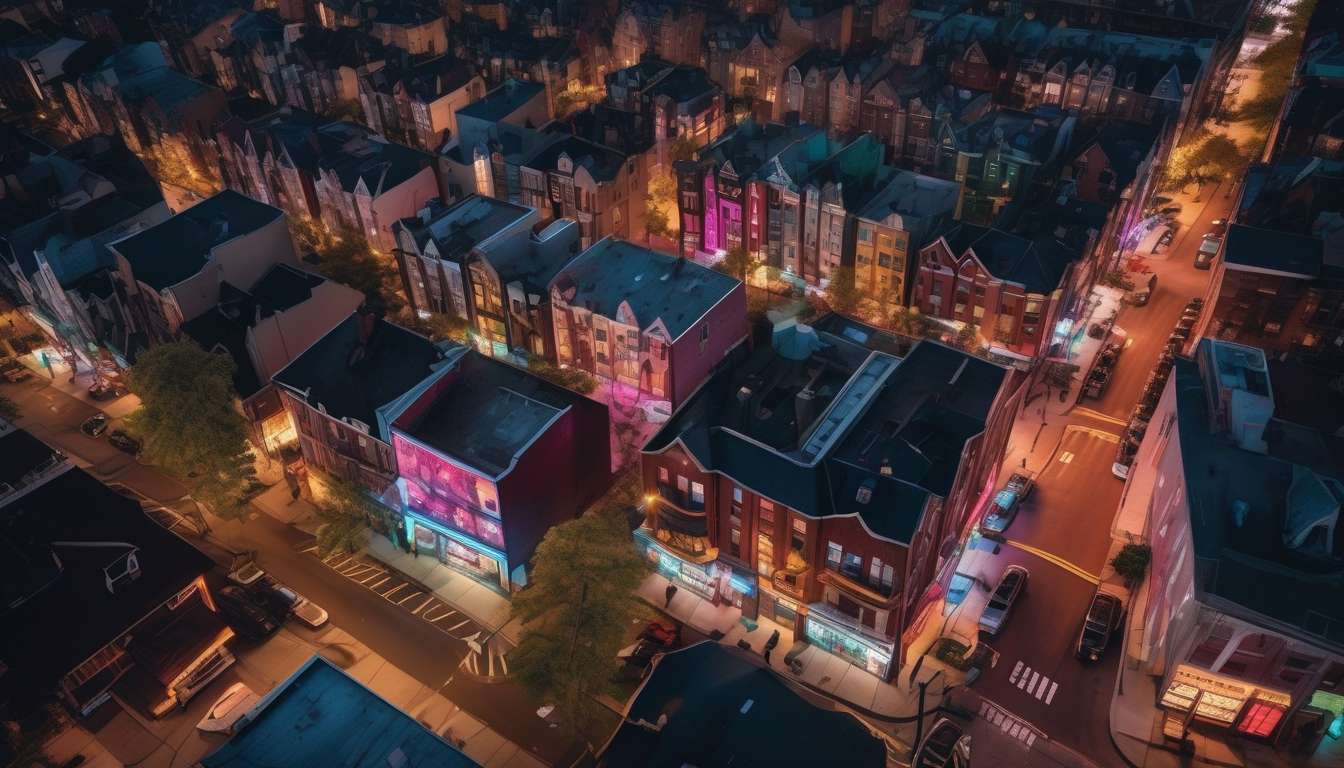
Fifty-seven percent of cities report revisiting zoning rules for adult entertainment within the last five years.
We are at the center of a charged public policy debate.
Key question:
How do community standards, economic development, and civil liberties intersect when municipalities redraw maps that determine where—and whether—adult businesses operate?
Evidence considered:
- Planners
- Business owners
- Residents
- Legal experts
Observed impacts:
- Zoning decisions ripple through neighborhoods and courtrooms alike.
- Tensions arise between protecting vulnerable populations and avoiding policies that stigmatize lawful enterprises.
- Fiscal concerns, property values, and calls for moral regulation influence elected officials.
Broader significance:
- Precedents set in these cases shape free expression and local autonomy elsewhere.
Our aim as we examine competing claims and data:
- Clarify trade-offs.
- Illuminate unintended consequences.
- Foster a more informed conversation about where communities draw their lines.
Policy Context
Purpose
We need to clarify the legal and administrative frameworks that shape how public entertainment is zoned and regulated. Zoning regulations don’t exist in a vacuum; they reflect shared values and practical needs, and stakeholders should feel included in those discussions.
Local zoning and permitting
- Local ordinances set the baseline. Municipal codes establish permissible districts, allowable hours, and density/intensity limits for entertainment uses.
- Permitting enforces standards. Permit processes (conditional use permits, special event permits, licenses) translate zoning rules into operational conditions.
- Community input through permitting. Permit review often provides formal avenues for neighbors and interested parties to comment or request conditions.
Constitutional constraints
- First Amendment limits content-based regulation. Policies cannot depend on the message, viewpoint, or expressive content of entertainment; they must be neutral with respect to speech.
- Time, place, manner focus. To withstand judicial review, regulations should target time, place, and manner (e.g., hours, sound levels, crowd size), not the content of performances.
Assessing community impact
- Use measurable criteria. Evaluate traffic, public safety, noise, and effects on neighborhood character with quantifiable standards (e.g., decibel limits, parking ratios, traffic studies).
- Avoid vague objections. Policies should require concrete evidence rather than subjective claims about “character” or “appropriateness.”
Procedural protections for fairness and legitimacy
- Transparent hearings. Public hearings should be well-noticed and open, with clear rules for participation.
- Clear evidence standards. Decision-makers should rely on documented studies, expert testimony, and written findings tying conditions to legitimate public interests.
- Equitable enforcement. Enforcement must be consistent and nondiscriminatory to maintain trust and legal defensibility.
Balancing interests
- Defensible policy = constitutional rights + practical concerns + civic life. Zoning and permitting should be designed so that they:
- Respect constitutional protections for expression;
- Address measurable impacts on public health, safety, and welfare; and
- Foster inclusive, transparent community engagement.
Implementation checklist (brief)
- Map permitted districts and clearly state allowed uses, hours, and density.
- Define permit types and public-notice/hearing procedures.
- Adopt measurable standards for noise, parking, and crowd control.
- Require written findings that link conditions to objective impacts.
- Train enforcement staff on neutral, consistent application.
- Create accessible opportunities for community input and appeals.
By following these principles—neutral, measurable standards; transparent procedures; and equitable enforcement—policy makers can craft zoning and permitting regimes for public entertainment that are both legally defensible and community-minded.
Legal Frameworks
We’ll examine the legal frameworks that govern public entertainment, focusing on constitutional limits, statutory authority, and administrative practices that shape what local governments can and cannot require.
Courts have long balanced municipal power against the First Amendment.
- Restrictions must be content-neutral, narrowly tailored, and leave ample alternative channels for expression.
- Judicial review prevents regulations that are overly broad or discriminate based on viewpoint.
Statutes and administrative codes create permitting processes and location rules, but they carry legal constraints.
- Permits and location-based rules must avoid overbreadth and arbitrary enforcement that could effectively isolate or burden certain venues.
- Clear statutory authority is required for local governments to impose conditions on entertainment activities.
Predictable procedures, clear standards, and opportunities for community input make regulation fair and defensible.
- Provide written standards for permit approval and denial.
- Offer prompt, transparent timelines and notice to applicants.
- Include public hearings or comment periods so community concerns are heard.
By centering consistent application and transparent appeals, jurisdictions can manage community impact while preserving constitutional rights.
- Establish administrative review and judicial-review pathways to prevent capricious decisions.
- Apply rules uniformly across similar activities to avoid claims of discrimination.
We want everyone involved to feel included in shaping rules that protect public safety and artistic expression without singling out particular forms of entertainment.
- Engage stakeholders—artists, venue operators, residents, and law enforcement—early in rulemaking.
- Use impact assessments to balance safety, noise, traffic, and cultural vitality.
Together, we can support lawful, equitable frameworks that reflect shared values.
- Prioritize transparency, equality of treatment, and procedural safeguards.
- Ensure regulations rest on demonstrable public-safety or nuisance interests rather than content-based preferences.
Community Perspectives
We want to hear how residents, artists, business owners, and visitors experience public entertainment so we can craft rules that reflect local needs and values.
We gather stories at town halls, walking tours, and informal meetups so everyone feels included and respected.
We acknowledge that zoning regulations must balance public safety, neighborhood character, and creative expression without singling out groups unfairly.
We recognize legal limits tied to the First Amendment, and we work together to ensure speech and performance are protected while addressing legitimate concerns about noise, hours, and proximity to sensitive uses.
We listen for patterns in community impact—who benefits, who bears burdens, and where adjustments are needed.
We want transparent processes, clear criteria, and accessible advisory roles so people from different backgrounds can shape outcomes.
We commit to ongoing review, timely communication, and participatory enforcement so our policies reflect lived experience and create spaces where everyone feels they belong and can thrive.
Economic Impacts
Goal: We assess how public entertainment affects local economies—job creation, small business revenue, property values, and municipal tax income—so we can weigh benefits against costs and design policies that support equitable growth.
What we measure:
- Employment numbers (direct and indirect).
- Vendor opportunities and small-business revenue.
- Foot traffic increases that help nearby restaurants and retail.
Zoning and land-use effects:
- Zoning regulations shape where venues operate, influencing economic clustering or dispersal.
- Balance needed between commercial vitality and residents’ needs to prevent displacement and preserve quality of life.
Constitutional considerations:
- First Amendment protections apply to many venues, so economic rules must respect free expression while permitting sensible land‑use controls.
Equity and distribution:
- Distribute benefits across neighborhoods and avoid concentrating negative externalities in marginalized areas.
- Community impact assessments should be required before approvals.
Policy tools we favor:
- Transparent permitting processes.
- Targeted incentives for local hiring.
- Mitigation funds for affected neighborhoods.
Overall aim: By centering inclusive economic measures, we can craft zoning that fosters shared prosperity and affirms that everyone belongs in the decisions shaping our local economies.
Public Safety Considerations
We’ll assess how venue placement, crowd management, and infrastructure contribute to public safety risks and mitigation needs.
Location matters: we consider how zoning regulations shape where venues sit relative to schools, transit hubs, and residential areas, because proximity affects crowd behavior and emergency response.
Protecting expression while reducing disorder: we acknowledge First Amendment protections while advocating sensible rules that reduce disorder without suppressing expression. We want policies that keep everyone safe and welcome.
Concrete measures we can support together:
-
Occupancy and crowd control.
- Clear occupancy limits.
- Trained security and de-escalation protocols.
-
Physical and environmental improvements.
- Lighting and sightline improvements.
- Infrastructure adjustments to facilitate safe egress and access.
-
Coordination with emergency services.
- Coordinated plans with local police, fire, and EMS.
- Regular drills and communication protocols.
Community-informed planning and data-driven enforcement.
- We’ll push for community-informed impact assessments so residents and business owners help define acceptable safety standards.
- We’ll favor data-driven monitoring over vague restrictions, ensuring enforcement respects civil liberties and avoids stigmatizing venues.
Overall goal: by centering public safety and community impact, we’ll create practical, rights-respecting approaches that let diverse people feel secure and included in our shared public spaces.
Property and Land Use
We’ll examine how property rights, land-use designations, and development incentives shape where and how public entertainment venues can operate.
We recognize that zoning regulations balance private ownership with neighborhood needs, and we want everyone at the table when decisions are made.
We consider how overlay districts, conditional-use permits, and setback rules guide business siting while protecting residential character.
We note that land-use plans and incentives, like tax abatements or targeted redevelopment, can encourage clustering or dispersal of venues, affecting local economies and access to cultural space.
We’re mindful of constitutional boundaries; the First Amendment limits government overreach, so rules must be content-neutral and narrowly tailored.
We weigh community impact studies, traffic and noise analyses, and public input processes to ensure policies reflect collective values.
We support transparent hearings and equitable enforcement so residents and proprietors alike feel seen, heard, and respected.
By grounding zoning in data and shared principles, we help build neighborhoods where creative enterprises and community life coexist.
Case Law and Precedent
We’ll review key court decisions that have defined how courts balance public safety, neighborhood character, and expressive activities when deciding where entertainment venues can operate.
Courts look to precedents requiring that zoning regulations be narrowly tailored to serve governmental interests without unduly restricting First Amendment–protected speech.
Courts often demand clear evidence of community impact rather than presumptions based on moral disapproval.
- Examples of the kind of evidence courts expect include:
- findings about secondary effects such as increased crime,
- empirical data showing decreased property values, and
- studies or reports linking the regulated activity to measurable harms in the locality.
Cases also require that ordinances provide alternative avenues for expression so venues are not effectively driven out of existence by blanket bans.
- Typical judicial expectations for alternatives include:
- meaningful location options where expression can continue,
- reasonable time, place, and manner restrictions, and
- not imposing conditions that functionally prohibit the protected activity.
From these precedents we draw practical lessons about drafting defensible ordinances.
- Articulate legitimate public-safety goals — specify the governmental interests (e.g., crime prevention, traffic safety, noise control).
- Limit scope and duration — tailor restrictions so they address the problem without sweeping more speech than necessary.
- Provide reasonable location options — ensure regulated entities have viable alternative places to operate.
- Base rules on evidence — include findings or studies linking the regulation to actual secondary effects in the community.
- Include clear, objective standards — avoid vague criteria that invite arbitrary enforcement.
This approach helps communities craft rules that respect constitutional protections while addressing local concerns, allowing residents and business owners to feel included in shaping fair, legally sustainable outcomes.
Policy Trade-offs
As we weigh competing priorities—public safety, neighborhood livability, and the rights of entertainers and patrons—we must confront trade-offs that require clear choices about what to protect and what to compromise.
Zoning regulations can promote safety and reduce nuisance, but they can also restrict lawful expression protected by the First Amendment.
We want policies that keep streets safe and neighborhoods welcoming without singling out performers or patrons unfairly.
We’ll prioritize measures that are narrowly tailored, evidence-based, and developed with affected people at the table, because belonging grows when communities shape rules together.
This means assessing community impact through data and lived experience, not assumptions, and crafting policies that address harms while minimizing speech restrictions.
- Consider buffers, licensing standards, and operational hours designed to address specific harms.
- Favor less restrictive alternatives where restrictions risk overreach.
- Establish clear review processes for contested or potentially burdensome rules.
By openly acknowledging trade-offs and including entertainers, residents, and business owners in decisions, we can build zoning approaches that balance rights, safety, and neighborhood wellbeing.
How would changes to adult entertainment zoning affect online-only adult businesses and performers who work from home?
We’re asking how zoning changes affect online-only adult businesses and performers who work from home.
Expected indirect impacts: Local rules targeting physical venues will likely not legally reach online creators, but stricter permitting, broader nuisance definitions, or aggressive enforcement could chill home-based work.
Policy recommendations:
- Protect private, consensual online labor by adopting clear legal language that excludes online-only activity from venue- or location-based restrictions.
- Use nondiscriminatory definitions so regulations do not single out sex-related or adult-content creators while appearing neutral.
- Promote community resources (education, legal guidance, business licensing assistance) so remote performers feel safe, legitimate, and included.
What specific support services (e.g., counseling, job training) are available or could be funded for workers displaced by stricter zoning?
We’re asking what support services exist or could be funded for workers displaced by stricter zoning.
Fund direct wraparound supports.
- Counseling, mental-health, and trauma-informed care.
- Career coaching, resume and interview workshops, and digital-skills training.
- Affordable childcare to enable job search and training participation.
- Transitional income assistance to cover basic needs during displacement.
Support entrepreneurship and legal stability.
- Small-business grants to help displaced workers start or pivot businesses.
- Legal aid for contract, employment, and housing issues.
Partner with trusted institutions to deliver culturally competent services.
- Community colleges and workforce boards for training and credentialing.
- Peer-support networks and LGBTQ+ organizations to ensure stigma-free, culturally competent care for everyone.
How do zoning changes intersect with sex trafficking prevention efforts, and what metrics would evaluate effectiveness?
Zoning changes to reduce trafficking risk.
We will use zoning to limit isolated locations, improve lighting, and require permitting with worker protections.
Coordination with partners to identify and assist victims.
We will coordinate with law enforcement, social services, and outreach groups to spot signs of coercion and offer exit pathways for people being exploited.
Metrics to measure effectiveness.
We will track:
- Referrals to services (number and types of services accessed).
- Prosecutions of traffickers (investigations, charges, convictions).
- Worker-reported safety (surveys or complaint data).
- Reduced complaints (fewer safety or nuisance complaints tied to high-risk locations).
- Changes in outreach contact rates (increases or decreases in contacts made by service providers).
Policy adjustments based on outcomes.
We will adjust zoning and permitting policies based on these metrics to improve protections and reduce exploitation.
Conclusion
You’ve seen how zoning for adult entertainment sits at the intersection of law, economics, safety, and community values, and you’ll need to weigh competing goals when shaping policy.
You’ll balance legal limits on speech with neighborhood quality of life.
You’ll consider economic benefits versus property impacts.
You’ll factor public safety and precedent.
Ultimately, you’ll choose trade-offs that reflect local priorities, apply clear standards, and include ongoing review so outcomes match your community’s evolving needs.