
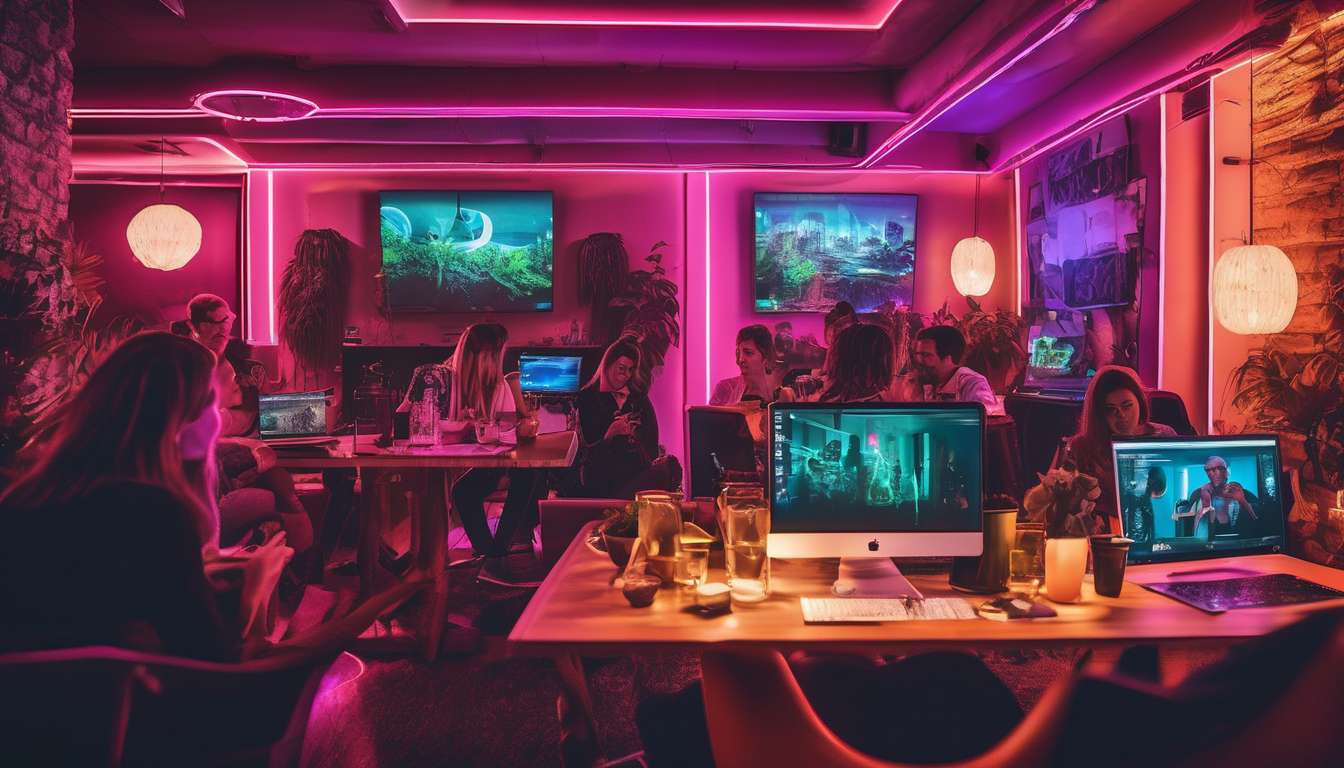
Just as a well-tuned orchestra transforms disparate notes into a symphony, workplace culture reforms are harmonizing professional rhythms with after-hours life.
We have watched rigid schedules and siloed roles give way to flexible hours, psychological safety, and inclusive practices that ripple beyond cubicles and conference rooms.
Together we are reassessing how late-night emails, mandatory weekend events, and stigma around socializing affect adult nightlife—its vibrancy, accessibility, and meaning.
As companies redesign norms to prioritize boundaries and wellbeing, nightlife scenes adapt:
- quieter venues flourish;
- curated community gatherings replace boisterous excess;
- varied entertainment schedules accommodate diverse circadian needs.
We explore how shifts in policy and attitude are reshaping where, when, and how adults choose to unwind.
By tracing employer-driven changes and their social consequences, we aim to illuminate the new ecology of evening life and consider how intentional workplaces can foster nightlife cultures that are healthier, more inclusive, and more sustainable for everyone.
Flexible Hours and Nightlife
Flexible hours increase access to nightlife without harming work-life balance.
We create psychologically safe spaces where colleagues can unwind without fear of judgment for arriving later or leaving earlier.
We embrace circadian-friendly scheduling so evening events, meetups, and volunteer nights align with varied energy patterns, allowing night owls and early birds to participate fully.
We design inclusive social programming that foregrounds accessibility, diverse interests, and low-pressure ways to connect, so nobody feels excluded or coerced into activities that don’t fit their rhythms.
We communicate options and boundaries intentionally, normalizing time off for personal or family needs without stigma.
We coordinate shifts and social calendars to reduce burnout and build camaraderie that extends into the city’s nighttime culture.
We cultivate workplaces that model respectful nightlife participation so people can belong to their teams and their communities, enjoy evenings together or apart, and still feel supported in both work and personal life.
Psychological Safety Outside Work
We make sure colleagues feel safe to be themselves outside work by setting clear norms, respecting boundaries, and supporting after-hours choices without judgment.
We build psychological safety beyond the office by encouraging honest conversations about comfort levels, preferred social formats, and energy rhythms.
We design circadian-friendly scheduling for optional evening events so night owls and early birds can join without sacrificing rest or wellbeing.
We prioritize inclusive social programming that offers varied times, quieter options, and substance-free choices, so everyone can participate in ways that feel authentic.
We commit to proactively checking in after gatherings, addressing missteps quickly, and reinforcing that belonging doesn’t require conformity.
We train hosts to read cues, cosign opt-outs, and model consent in invitations and interactions.
We celebrate diverse after-work lives — family responsibilities, creative pursuits, or nighttime routines — so colleagues know their whole selves are welcome.
We hold ourselves accountable with feedback loops and clear guidelines, ensuring psychological safety outside work stays intentional, practical, and rooted in mutual respect.
Boundaries and After-Hours Etiquette
We set clear after-hours boundaries and etiquette so everyone knows what’s expected, how to opt out, and how we’ll respect personal time.
We agree on communication norms:
- When messages are urgent and require immediate attention.
- When messages can wait until normal working hours.
- Which channels are for social invitations versus work-related follow-ups.
We prioritize psychological safety by making opt-outs stigma-free:
- Saying “no” will not affect inclusion, assignments, or standing.
- Hosts and leaders explicitly acknowledge and respect opt-outs.
We schedule with circadian-friendly options:
- Offer earlier options and alternative times to include both night owls and early risers.
- When possible, rotate timings so no one group is consistently disadvantaged.
We share guidelines around consent, drinking, and personal space to prevent misunderstandings:
- Remind hosts to check in privately if someone seems uncomfortable.
- Make expectations explicit (e.g., consent-first for physical contact, clear drink policies).
We create transparent RSVP systems and clear cancellation policies so expectations stay fair.
We ensure leaders model boundaries:
- Leaders turn off work notifications during personal hours.
- Leaders explicitly endorse rest and discourage expectation of 24/7 availability.
By combining respect, practical rules, and flexible timing, we build after-hours etiquette that fosters belonging without coercion.
Inclusive Social Programming
We design social events that welcome different interests, accessibility needs, cultural backgrounds, and comfort levels so everyone can join on equal terms.
We craft inclusive social programming that centers psychological safety by setting clear behavior norms, offering opt-in formats, and training hosts to notice discomfort and intervene supportively.
We rotate activity types so varied temperaments feel invited rather than pressured:
- Quiet lounges
- Participatory workshops
- Lively music sets
We schedule with circadian-friendly timing in mind, offering earlier options and predictable end times so people can balance rest and social life.
We provide multiple entry points to accommodate different comfort levels and commitments:
- RSVP-free mingles
- Ticketed classes
- Small-group meetups
Each option includes transparent descriptions of crowd size, noise level, and accessibility features.
We solicit feedback continuously and act on suggestions to refine access, language, and programming content.
We communicate inclusively, using pronouns and trigger warnings when appropriate, and ensure venues have clear sightlines and quiet zones.
By centering belonging, we make adult nightlife a place where everyone can participate safely and joyfully.
Impact on Venue Business Models
Many venues will need to adapt their revenue models, staffing, and space design to support inclusive, varied nightlife offerings without sacrificing profitability.
We’ll rethink pricing, balancing cover charges with membership tiers and pay-as-you-go options so everyone feels welcome.
We’ll train staff in de-escalation and active listening to create psychological safety for both employees and patrons, which reduces turnover and builds loyal communities.
We’ll redesign layouts to offer layered spaces—quiet corners, dance floors, accessible seating—that let people choose how they participate.
We’ll diversify income through daytime uses, partnerships, and curated events tied to inclusive social programming, ensuring nights that appeal across identities and ages.
Operational changes to support wellbeing and productivity:
- Shift hiring practices toward diverse teams.
- Implement predictable, fair shift rotations that respect wellbeing.
- Adopt policies that reduce burnout and increase retention.
By aligning business models with values of belonging and safety, venues become resilient: financially sustainable, welcoming, and adaptable to practices like circadian-friendly scheduling without compromising service or atmosphere.
Circadian-Friendly Event Scheduling
We’ll schedule events to align with natural sleep–wake patterns.
We’ll offer earlier shows, staggered late-night options, and clear end times to support attendees’ wellbeing without sacrificing atmosphere.
Designing circadian-friendly scheduling helps people join reliably, arrive refreshed, and stay engaged.
By blending earlier community hours with thoughtfully spaced late sets, we create predictable rhythms that respect diverse routines and promote psychological safety.
We commit to inclusive social programming that signals everyone belongs.
- Families can drop by earlier.
- Night owls can find later pockets.
- Shift workers can access events that match their circadian needs.
We communicate clearly and remove barriers.
- We post start and end times clearly.
- We publish quiet-hour expectations.
- We provide transit and rest resources.
We train staff to reinforce welcoming norms and respond to needs.
- Staff are trained to intervene if someone feels unsafe.
- Staff adapt schedules based on attendee feedback.
The result: consistent attendance, deeper connections, and nightlife that values health and inclusion without diluting the joy of shared evenings.
Community-Led Nighttime Spaces
We will empower local groups to design and run nighttime spaces that reflect community needs, culture, and safety norms.
We will create hubs where neighbors feel ownership.
- Prioritize psychological safety so everyone can relax, speak up, and belong.
- Establish visible stewarding so people trust the environment.
- Set norms together, including:
- Clear consent practices.
- Respectful conflict resolution.
We will coordinate circadian-friendly scheduling to honor varied rhythms.
- Offer later starts for creatives and earlier community hours for families and shift workers, reducing burnout and increasing attendance.
- Use flexible schedules to accommodate different sleep-wake cycles.
We will invite residents to plan inclusive social programming.
- Celebrate diverse identities, ages, and abilities.
- Mix low-stimulation options with lively offerings to suit different preferences.
- Keep programs accessible through modest budgets, shared governance, and transparent decision-making.
We will monitor outcomes and iterate based on feedback.
- Collect participant feedback and track simple metrics to assess impact.
- Use findings to adjust spaces so they genuinely serve local life.
By centering belonging, safety, and flexible timing, we will build nighttime places that sustain relationships, creativity, and wellbeing across our neighborhoods.
Policy-Driven Cultural Shifts
We will align regulations, incentives, and workplace norms to shift cultural expectations around night work, making late-hours employment safer, healthier, and more valued.
We will institutionalize psychological safety, ensuring every worker feels heard, respected, and protected from retaliation when they raise concerns about safety or wellbeing.
We will push for circadian-friendly scheduling standards that reduce health harms by prioritizing:
- predictable shifts,
- sufficient recovery time, and
- voluntary night rotations.
We will advocate for compensation and supports that recognize night work as skilled, sustainable careers, including:
- wage premiums,
- health benefits, and
- transportation supports.
We will fund training for managers and enforce fair reporting mechanisms to build inclusive leadership and trustworthy accountability systems.
We will promote inclusive social programming that connects night workers to peers and community resources, fostering belonging beyond the workplace.
We will measure outcomes with transparent metrics—health, retention, and worker satisfaction—and iterate policies based on lived experience.
Together, we will reshape norms so adult nightlife work is dignified, equitable, and anchored in mutual care.
How do these workplace-driven nightlife changes affect legal responsibilities for employers if employees are injured or harassed at after-hours events?
Current question: How do workplace-driven nightlife changes affect legal responsibilities when employees are injured or harassed at after-hours events?
Short answer: Employers generally still owe a duty of care and can be liable when risks were known or should have been known, when events are work-related, or when employers failed to prevent or address harassment.
Key legal principles:
-
Duty of care and foreseeability
-
Employers owe a duty of care to employees that can extend to after-hours events if the employer organized, promoted, sponsored, or otherwise encouraged attendance.
-
Foreseeability matters: if the employer knew or should have known about risks (unsafe venues, alcohol-related behavior, previous incidents), liability is more likely.
-
-
Work-relatedness
-
Events that are work-related (team-building, client entertaining, company-sponsored parties, mandated attendance) more readily create employer responsibility.
-
Social gatherings with minimal employer involvement may reduce liability, but not eliminate it—especially where the employer’s actions linked the event to work.
-
-
Harassment and discrimination
-
Employers can be liable for harassment or discrimination that occurs at after-hours events if the conduct is connected to workplace relationships or if the employer failed to take reasonable steps to prevent or remedy harassment.
-
Title VII and equivalent state/local laws apply where harassment is based on protected characteristics; employers must have and enforce anti-harassment policies.
-
-
Alcohol, third parties, and venue safety
-
Serving alcohol or choosing unsafe venues increases foreseeable risk; employers should anticipate and mitigate alcohol-related harms.
-
Liability may extend to injuries caused by third parties (clients, vendors, attendees) if the employer had a role in the event and failed to manage risks.
-
Practical steps employers should take (to protect staff and limit legal exposure):
-
Implement and communicate clear policies
-
Anti-harassment and code-of-conduct policies that explicitly cover off-duty and after-hours events.
-
Policies on alcohol, transportation, and expected behavior.
-
-
Train employees and managers
-
Regular training on harassment prevention, bystander intervention, and recognizing/reporting misconduct.
-
Manager training on obligations to prevent and respond to incidents.
-
-
Plan and mitigate risks
-
Choose safe venues, limit or manage alcohol, provide transportation options, and set event parameters (start/finish times, chaperones, etc.).
-
Consider whether attendance is voluntary or mandatory and adjust obligations/communications accordingly.
-
-
Encourage and streamline reporting
-
Clear, confidential reporting channels and assurances against retaliation.
-
Prompt investigation procedures and timely corrective action where needed.
-
-
Document incidents and responses
- Keep records of complaints, investigations, corrective actions, communications, and risk-mitigation measures to demonstrate reasonableness.
-
Consult legal counsel when needed
- For high-risk events, previous incidents, complaints alleging serious misconduct, or cross-jurisdictional issues.
Bottom line: Employers remain responsible for reasonably foreseeable harms connected to work-related nightlife activities. Proactive policies, training, event planning, reporting mechanisms, and documentation both protect employees and reduce legal exposure.
What are best practices for small businesses or startups that lack HR departments to implement these cultural reforms for staff who socialize together at night?
Goal: Help small teams with no HR safely socialize after hours using practical, inclusive steps.
Set clear expectations.
- Define when and where social events are appropriate and what behavior is expected.
- Communicate expectations ahead of time so everyone knows the plan and norms.
Create a simple code of conduct.
- Keep it short and actionable (acceptable behavior, prohibited behavior, confidentiality).
- Share it with the team before events and make it easy to reference.
Offer opt-out options without stigma.
- Make it explicit that attending is voluntary and not required for career advancement or team standing.
- Provide alternatives (e.g., daytime lunches, virtual hangouts) so people can participate in ways that suit them.
Rotate sober or designated hosts.
- Assign or rotate volunteers who remain sober and act as a supportive presence during events.
- Ensure those volunteers are supported and not overburdened.
Provide transport or expense support.
- Offer safe-travel options (ride-sharing, reimbursed taxis, public-transit subsidies) or cover modest expenses so people can get home safely.
- Communicate how to access this support confidentially.
Encourage reporting through trusted peers.
- Identify go-to teammates or managers who will receive concerns and take them seriously.
- Make it clear reports will be handled promptly and discreetly.
Train leaders on boundaries and response.
- Give team leads practical guidance on intervening, de-escalating, and supporting affected people.
- Role-play or discuss scenarios so responses feel natural and respectful.
Document incidents and follow up.
- Keep brief, factual records of problems and actions taken to build organizational memory.
- Use documentation to inform improvements while protecting privacy.
Regularly check in and adapt practices.
- Review how social events are working in team retros or pulse checks.
- Adjust norms and supports based on feedback so everyone feels respected and included.
Could shifting nightlife to be more workplace-friendly unintentionally reduce spontaneous, creative interactions that historically fueled arts and music scenes?
We worry that making nightlife too workplace-friendly could tame the spontaneity that sparks art and music.
We can prioritize safety and respect while protecting unstructured moments.
- Keep some nights informal.
- Preserve DIY spaces.
- Encourage mixed-intent events where socializing and creative risk coexist.
By intentionally designing flexible atmospheres and trusting people to mingle freely, we’ll foster belonging without sterilizing the serendipity that fuels scenes.
Conclusion
Workplace culture reforms are reshaping adult nightlife in ways that respect your time, health, and social needs.
As flexible hours, psychological safety, and clear after-hours boundaries spread, venues and employers will collaborate on inclusive, circadian-friendly programming that fits diverse lives.
Community-led spaces and policy changes will keep nightlife accessible and sustainable, so you can enjoy meaningful evening experiences without sacrificing rest, work performance, or personal wellbeing.