
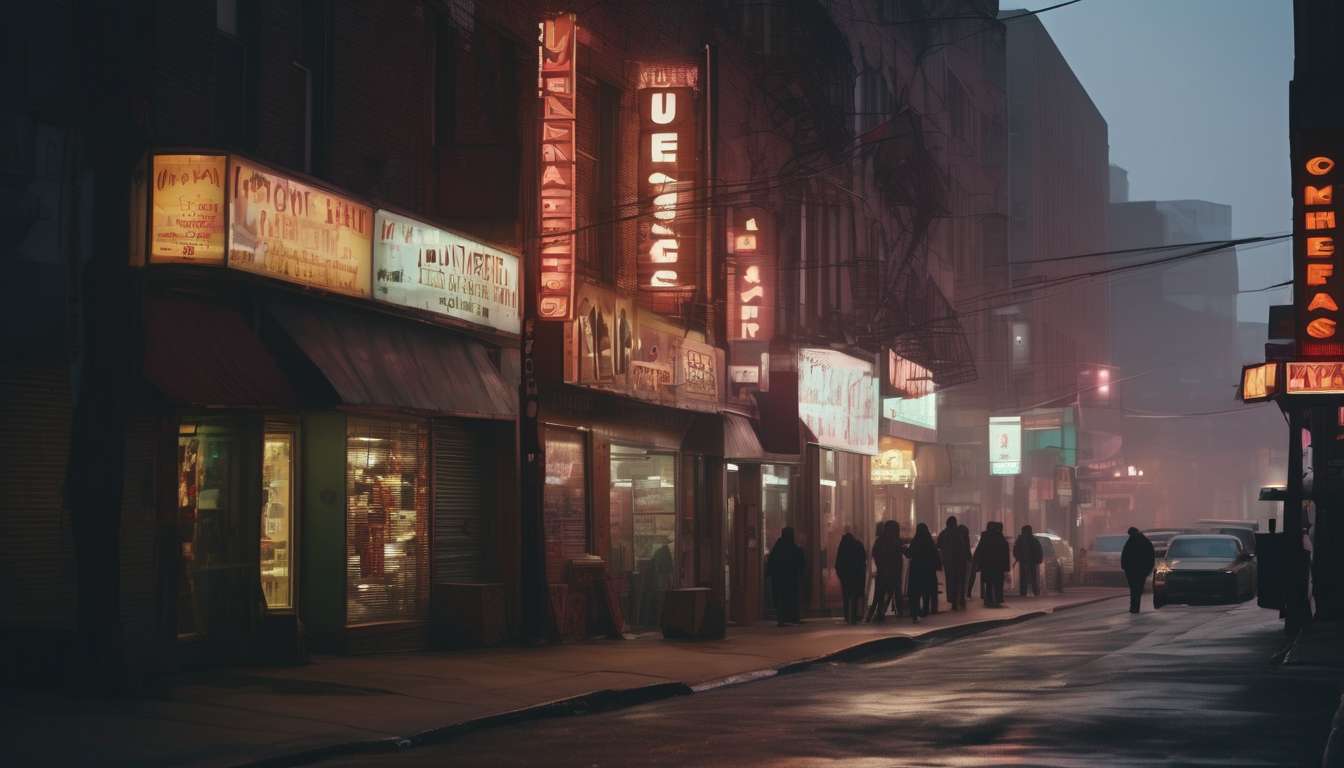
Never have we encountered a policy debate that so vividly splits economists, planners, and community activists as the presence of adult entertainment venues.
We assert that viewing these businesses solely through moral or nuisance lenses blinds us to measurable economic dynamics: employment figures, tax revenues, property valuations, and local service demand.
By treating strip clubs and adult theaters as economic agents within regional systems, we uncover patterns that challenge prevailing assumptions about growth, blight, and urban renewal.
We argue that quantitative assessment — paired with qualitative insights from residents and workers — yields a more nuanced policy toolkit than zoning bans or moralistic exclusion alone.
Our aim is not to moralize but to illuminate: to map how these venues integrate into labor markets, affect nearby commerce, and shift municipal budgets.
In doing so, we invite planners and policymakers to consider evidence-based interventions that balance community welfare with economic realities.
Economic Footprint
We will assess how adult entertainment venues contribute to local economies through jobs, taxes, and related business activity.
Key metrics for measuring economic impact:
- Direct spending by patrons — ticketing, food/drink, private services.
- Purchases from suppliers — equipment, maintenance, security, cleaning.
- Flow-on effects to nearby businesses — restaurants, bars, parking, retail.
Employment and local circulation of money:
- Focus on how payroll and vendor contracts circulate money within communities, not on workforce composition (reserved for the next subtopic).
- Examine local hiring levels, average payroll outlays, and contract values that keep income and purchases in-region.
Tax revenue streams to track:
- Sales taxes collected on goods and services.
- Licensing and permit fees specific to adult entertainment.
- Property taxes on venues and nearby commercial properties.
- These support municipal services and provide a measurable fiscal contribution.
Estimating broader economic footprint:
- Compare venues’ expenditures to regional multipliers to estimate indirect and induced effects.
- Identify neighborhoods that disproportionately benefit from ancillary commerce (restaurants, parking services, etc.).
- Quantify spillover benefits using local employment and business revenue data.
Community framing and transparency:
- Present the results so everyone in the community sees these numbers as part of a shared story about neighborhood vitality and public resources.
- Use transparent data and collaborative interpretation to create a concise, evidence-based account of the sector’s role in sustaining local economic ecosystems.
Employment Dynamics
We’ll examine how hiring practices, payroll levels, and contracting decisions keep money circulating locally and shape job opportunities connected to adult entertainment venues.
Employment patterns are part of a shared local story: staff wages, benefits, and hours determine how families and neighbors meet needs.
By hiring locally, venues increase local employment and broaden who participates in the area’s economic impact.
- Examples include bartenders, security, cleaning crews, and entertainers.
- Local hires circulate earnings through nearby shops, services, and housing.
Contracting choices amplify or reduce local economic circulation.
- Sourcing supplies from nearby businesses supports local suppliers and preserves spending power in the region.
- Using national chains shifts spending out of the local economy and reduces multiplier effects.
Workforce stability matters for planning and community belonging.
- Predictable schedules and clear career pathways help employees plan finances, childcare, and housing.
- Stable employment fosters stronger ties between workers and the community.
Measuring payroll totals and turnover rates gives concrete signals about job quality and economic resilience.
- Payroll totals indicate how much income is entering the local economy.
- Turnover rates reveal stability, training investment, and potential hidden costs.
While tax revenue influences municipal decisions, focusing on employment dynamics shows how workplace choices build inclusive opportunity.
- Direct employment decisions spread spending power and integrate venue operations into the regional economy.
- Emphasizing wages, benefits, hiring, and contracting highlights how venues can contribute to broader economic health.
Tax Revenue Impacts
We’ll assess how taxes collected from adult entertainment venues—sales, payroll, and business taxes—translate into funding for public services and infrastructure.
We’re examining how measurable tax revenue from these venues contributes to the shared community budget, and how that ties to broader economic impact.
When we add venue sales taxes, employer payroll contributions, and business license fees, we see direct inflows that support municipal services we all use:
- roads
- sanitation
- safety
- community programs
We also consider indirect effects: by sustaining local employment, venues help maintain household incomes that generate additional consumption and tax receipts.
That multiplier amplifies tax revenue beyond the establishments themselves.
We’ll be mindful of distributional questions—whether revenues offset costs like increased service demands—and we’ll recommend transparent accounting so neighbors can see how funds are allocated.
In short, we want the community to know the fiscal role these businesses play, so we can make collective decisions grounded in clear economic impact data.
Property Value Effects
Purpose and scope.
We’ll examine how adult entertainment venues affect nearby property values by considering both measurable price changes and perceptions that influence demand. We acknowledge that numbers and neighborhood feelings both matter, and we want everyone in the community to understand the implications.
Empirical evidence is mixed.
Empirical studies show mixed economic impacts:
- Some areas experience modest declines in residential prices near such venues.
- Other areas see negligible change, especially when venues are sited near commercial strips rather than family housing.
Context matters.
We emphasize that zoning, hours of operation, and management shape outcomes.
- Proper zoning that separates venues from family neighborhoods tends to reduce negative price effects.
- Limited or well-regulated hours and professional on-site management can mitigate nuisance concerns.
Indirect channels affect property values.
There are important indirect effects through local economics and services:
- Employment and tax revenue — venues that contribute stable jobs and municipal income can support amenities that bolster property desirability.
- Perceived safety and nuisance — venues operating on the margins or attracting disorder can depress demand through safety concerns or perceived declines in neighborhood quality.
Recommended approach for stakeholders.
We urge stakeholders to:
- Examine local data on prices, crime, and municipal finances.
- Involve residents in siting and permitting decisions to surface perception issues early.
- Weigh both measurable price effects and communal perceptions when assessing potential impacts on property values.
Bottom line.
The net effect of adult entertainment venues on nearby property values is not uniform; it depends on local context, regulation, and management, and both objective data and community perceptions should guide decisions.
Local Business Linkages
We should assess how adult entertainment venues connect with nearby businesses.
Why: Understanding whether these venues draw additional customers to restaurants, hotels, and retail shops or divert spending away from family-oriented enterprises helps the community see the broader economic impact beyond a single storefront.
How we’ll measure linkages:
- Map customer flows (where patrons come from and where they go before/after visits).
- Survey nearby business owners about perceived changes in traffic, sales, and clientele.
- Compare evenings with and without events to identify short-term spikes or declines in nearby business activity.
Employment effects to evaluate:
- Measure changes in local employment tied to increased foot traffic.
- Classify jobs created as stable, part-time, or transient to assess quality and permanence.
Public revenue impacts:
- Quantify effects on tax revenue from sales and admissions so public budgets reflect reality.
Transparency and inclusion:
- Share methods and results openly to invite neighbors, business owners, and policymakers into the analysis.
- Ensure broad participation so everyone feels included in shaping local policy.
Goal: Produce a clear accounting of positive spillovers and competition effects to inform collective decisions about zoning, incentives, and support for diverse businesses without leaving anyone out.
Public Services Demand
Scope:
We’ll evaluate how adult entertainment venues change demand for public services—like policing, sanitation, transportation, and health inspections—and estimate the associated costs and resource needs.
Direct and indirect effects:
- Sanitation: Increased foot traffic can raise trash pickups and street-cleaning frequency.
- Transportation: Higher late-night transit ridership and demand for parking or ride-hailing.
- Policing: Concentrated nighttime activity often requires targeted patrols, crowd management, and overtime.
- Health inspections: Timely inspections for venues and nearby food/drink establishments may become more frequent.
Quantification approach:
- Estimate baseline service usage and costs.
- Measure incremental changes attributable to venues (footfall, incident rates, service calls).
- Convert changes into personnel hours, equipment usage, and overtime.
- Translate resource needs into cost estimates and budget impacts.
Broader economic impacts:
- Local employment: Venues can boost jobs, altering demand for social services and transit.
- Tax revenue: Increased commercial activity affects sales and business tax receipts, which can offset some public costs.
- Indirect effects: Secondary businesses (restaurants, ride services) change usage patterns for public services.
Scenario modeling:
- Build low/medium/high activity scenarios (hours of operation, customer volumes).
- Simulate service schedule adjustments (shift coverage, increased pickups, targeted patrol times).
- Estimate spillover effects on neighboring neighborhoods and mitigation needs.
Outputs and recommendations:
- Transparent cost estimates that separate one-time setup (equipment, training) from recurring costs (personnel, overtime).
- Identification of where additional personnel hours, equipment, or scheduling changes are needed.
- Strategies to avoid straining adjacent areas (staggered shifts, targeted sanitation windows, coordinated transit schedules).
- Guidance on using local tax revenue and modest investments to align public service capacity with venue-driven demand.
Principles:
- Collaborative planning with venue owners, residents, and service agencies.
- Clear metrics for monitoring impact (calls for service, litter volume, transit boardings, inspection frequency).
- Modest, data-driven investments to balance public wellbeing with economic contributions.
Regulatory Approaches
Goal: Evaluate regulatory approaches that balance public safety, neighborhood character, and the operational needs of adult entertainment venues while recognizing their economic contributions.
Principles to guide regulation
- Protect public safety and neighborhood character without imposing arbitrary constraints that simply push businesses underground.
- Acknowledge economic contributions such as local employment, business investment, and tax revenue when designing rules.
- Favor clear, predictable, and transparent processes for zoning, licensing, fees, and inspections.
Recommended regulatory components
-
Zoning standards.
- Use clear zoning categories that define where adult entertainment venues may locate.
- Incorporate objective distance or buffer criteria (e.g., from schools, parks) and context-sensitive exceptions when warranted.
- Allow conditional-use permits for site-specific mitigations when strict standards would eliminate viable locations.
-
Licensing and permitting.
- Create predictable permitting timelines and criteria so operators understand expectations.
- Use conditional-use permits or special exceptions to allow negotiation of reasonable, site-specific conditions with affected neighbors.
- Tie license renewals to compliance with published standards rather than discretionary judgments.
-
Transparent fee structures.
- Charge fees tied to actual administrative and inspection costs, not punitive surcharges.
- Publish fee schedules and the rationale so operators and the public understand costs.
-
Operating-hour and activity standards.
- Set clear, objective operating-hour rules designed to reduce nuisance conflicts while preserving business viability.
- Address specific operational concerns (lighting, ingress/egress, noise) with measurable standards where possible.
-
Safety inspections and compliance.
- Conduct regular safety inspections focused on compliance and public safety rather than punishment.
- Use graduated enforcement: warnings and corrective plans for minor violations, escalating only for repeated or serious noncompliance.
-
Community engagement and mitigation options.
- Use conditional-use permit processes to allow neighbors and operators to negotiate practical mitigations such as lighting, noise limits, and buffers.
- Encourage mediation and community meetings before adversarial enforcement actions.
-
Data-driven review and policy adaptation.
- Institute periodic reviews that assess economic impact, employment trends, public-safety outcomes, and neighborhood effects before changing regulations.
- Use data from inspections, tax receipts, employment figures, and neighborhood surveys to refine policy iteratively.
Expected outcomes
- Reduced conflicts between venues and neighborhoods through objective standards and negotiated mitigations.
- Predictable regulatory environment that lowers compliance costs and reduces incentives to operate underground.
- Preservation of jobs and tax revenue by maintaining viable, accountable businesses.
- Fair, accountable regulation that balances community concerns with economic realities and fosters inclusion and shared prosperity.
If you’d like, I can draft sample zoning language, a model conditional-use permit checklist, or a template fee schedule tied to administrative costs. Which would be most useful next?
Community Perspectives
Many residents and business owners express strong views about adult entertainment venues, so we should listen, document concerns, and incorporate community input into policy design.
We value belonging and want everyone around us to feel heard, so we convene forums and surveys that let neighbors and entrepreneurs share concrete experiences.
We ask how venues affect commercial corridors, perceptions of safety, and nearby property values, then weigh those accounts alongside measured economic impact data.
We jointly examine how local employment and tax revenue from these businesses support services we all use, and we balance that with quality-of-life considerations.
We prioritize transparent communication:
- Publishing findings
- Outlining trade-offs
- Inviting feedback on zoning or licensing proposals
By centering community voices and clear metrics, we create policies that reflect shared priorities, reduce conflict, and foster neighborhoods where economic opportunities and social cohesion coexist.
How do adult entertainment venues affect crime rates and public safety in ways that differ from what is covered under “Public Services Demand”?
The Current Question asks how adult entertainment venues affect crime rates and public safety beyond “Public Services Demand.”
We see patterns where concentrated nightlife can shift late-night crime hotspots, strain policing strategies, and influence perceptions of safety.
We’re mindful that impacts vary by zoning, management practices, and community ties, so we advocate for:
- Targeted enforcement to address specific problem behaviors without blanket policing that can harm community trust.
- Outreach to at-risk populations and neighboring residents to reduce harm and increase reporting.
- Collaboration with venue operators to encourage best practices (lighting, security training, crowd management).
- Community-informed harm-reduction approaches that balance safety and inclusion, incorporating resident input and local service providers.
What are the health and occupational safety risks faced by workers in adult entertainment venues, and what measures can mitigate them?
Physical injuries: Workers in adult entertainment venues can face slips, trips, falls, repetitive-strain injuries, and injuries from stage equipment or props.
Mitigation: Provide safe, well-maintained facilities and equipment, routine safety inspections, clear incident reporting, training in safe handling of props and rigging, and access to basic PPE (non-slip footwear, gloves where appropriate).
Sexual health exposures: There is risk of STI/HIV/bloodborne pathogen exposure from sexual contact or contact with bodily fluids.
Mitigation: Ensure easy, confidential access to regular STI/BBV screening and vaccination (e.g., hepatitis B), provide condoms, dental dams and lubricant, establish clear informed-consent protocols, and offer occupational post-exposure prophylaxis (PEP) guidance and pathways.
Harassment and violence: Workers can experience verbal abuse, unwanted touching, physical assault, stalking, and online harassment.
Mitigation: Create and enforce a clear anti-harassment policy, provide multiple confidential reporting channels, train staff and management in bystander intervention, maintain visible and trained security personnel, implement safe-exit routes and panic-button systems, and share resources for legal support.
Mental health strain: Stigma, high-performance pressure, emotional labor, and exposure to trauma can cause anxiety, depression, burnout, and PTSD.
Mitigation: Offer trauma-informed mental health services, confidential counseling and peer-support groups, regular mental-health check-ins, reasonable shift scheduling and breaks, and a workplace culture that normalizes seeking help.
Substance misuse: Substance use may be used to cope with stress or to meet job demands, increasing risks of overdose, impaired judgment, and accidents.
Mitigation: Provide nonjudgmental access to substance-use support and referral services, training in overdose recognition and naloxone use, workplace policies that prioritize safety over punishment, and alternatives to substance-dependent performance (e.g., no-pressure policies).
Safer work policies and practices: Adopt practical policies that reduce risk while respecting worker autonomy.
- Examples:
- Offer no-touch or limited-contact shifts or roles as options.
- Maintain on-site or on-call trained security.
- Use clear client screening and booking procedures.
- Ensure private, secure changing and rest areas.
Training and empowerment: Regular, inclusive training increases safety and confidence.
- Training should include:
- Harassment prevention and reporting procedures.
- Sexual-health best practices and use of PPE.
- De-escalation and conflict management.
- Trauma-informed approaches and mental-health first aid.
- Substance-overdose recognition and response.
Confidentiality and non-discrimination: Protecting privacy and preventing discrimination reduces barriers to seeking help.
Mitigation: Enforce confidentiality in testing, reporting, and support services; adopt non-discrimination policies; and involve workers in policy development to ensure measures are respectful and practical.
Monitoring and continuous improvement: Regularly review incidents, collect anonymous feedback, and update policies.
Mitigation: Conduct periodic risk assessments, track training uptake and outcomes, and engage worker representatives in safety committees to ensure practices remain effective and rights-respecting.
If you’d like, I can convert this into a short checklist, a one-page policy template, or a training outline tailored to a specific venue type (strip club, private events, webcam/studio).
How do cultural and moral attitudes toward adult entertainment influence policy decisions and economic outcomes across different regions?
Cultural and moral attitudes shape policy and economic outcomes.
They influence public acceptance, zoning, licensing, and enforcement, which in turn affect how industries develop and operate.
Conservative norms tend to restrict activities.
- These restrictions can limit business growth.
- They can push operations underground, increasing enforcement challenges and public-health risks.
Permissive cultures often encourage regulation and protections.
- Regulated markets can support worker protections and safer working conditions.
- They can generate tourism and broader economic benefits.
We support inclusive, balanced policy approaches.
- Harm reduction: prioritize reducing harms to individuals and communities.
- Labor rights: ensure protections and fair treatment for workers.
- Community input: involve local stakeholders to reflect public values and needs.
Overall goal: balance public morals with economic and public-health realities through policies grounded in harm reduction, labor rights, and meaningful community engagement.
Conclusion
You’ve seen how adult entertainment venues affect regional economies across jobs, taxes, property values, local business links, public services, regulation, and community views.
Balancing economic benefits—employment, spending, and tax revenue—against potential costs—property impacts, service demand, and social concerns—means decisions should be evidence-based and locally tailored.
You’ll want policies that maximize positive linkages with nearby businesses, mitigate harms through zoning and oversight, and engage residents so outcomes match community priorities and economic goals.